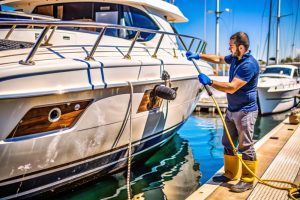
Selling a yacht is about selling a dream, but before that dream can become reality for a buyer, it must pass a rigorous, objective test: the pre-purchase inspection survey. This survey is the gold standard for vetting a vessel’s condition, and how you present your yacht can significantly impact the process.
Think of the survey day as the yacht’s job interview. To secure the sale, you need to ensure the candidate (your yacht) is prepared, transparent, and fully accessible.
The Critical Balance: Afloat and Ashore
A yacht is a three-dimensional asset, and a complete picture of its condition requires viewing all those dimensions. This means the surveyor needs to see it both afloat and ashore.
If your vessel is sitting serenely in its slip, arrangements must be made to lift it out. If it’s resting on the hardstand, arrangements must be made to launch it for a sea trial.
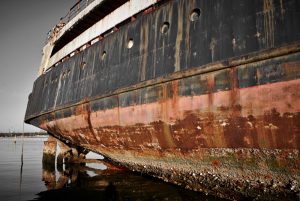
The Analogy of the Iceberg: Only about 10% of a yacht is visible when it’s in the water. The hidden 90% (the keel, running gear, rudder, and underwater hull) holds the most risk and is where critical structural issues or osmosis are often found. Without inspecting the underwater hull, the survey remains partial and incomplete, and any findings will be subject to limitations regarding the uninspected condition. This lack of full access can be a red flag that chills the sale.
The Paper Trail: The Yacht’s Biography
A yacht’s history is as important as its current condition. The surveyor needs to review the official narrative of the vessel, which is told through its documents. Having a complete, organized file is a massive sign of responsible ownership and greatly accelerates the surveyor’s work.
You should have the yacht’s essential “biography” available, either physically onboard or provided digitally:
- Financial & Legal Proof: Original purchase invoice, intermediate sale contracts, and, critically, Proof of VAT payments (if applicable) to ensure clean title and legal use.
- The Blueprint: Builder’s manual and Certificates of construction.
- The Maintenance Record: Detailed records of major investments, refits, or upgrades, alongside all repair and maintenance records with invoices. This shows a verifiable history of care.
Physical Access: Clearing the Path
The surveyor needs to be an archaeologist, not a contortionist. The easier you make their job, the more thorough (and faster) their work will be.
- Safety First: Provide easy and safe access to board the vessel, which means a secure gangway, launch, or a properly secured ladder.
- The Sea Trial: If a trial trip is conducted, the crew, skipper, or owner must be on board and fully competent in operating the vessel. While the surveyor observes and tests systems, they will not normally assume command of your yacht.
- Decluttering the Scene: Remove personal inventory and items that obstruct full access. The surveyor needs to get into lockers, behind panels, and under berths.
- The Tell-Tale Bilge: Bilges should be dry and clean. This is paramount, as leaks are much easier to observe and trace in clean conditions. A dirty, wet bilge hides leaks, corrosion, and potential structural issues.
- Critical Clearances: Ensure adequate access is provided to important areas. This includes clearing around the anchor chain locker, keel section and keel bolts, steering system, and fuel tanks. If the surveyor needs to open an inspection port or remove light paneling (non-destructive access), it should be possible without significant delay.
Presenting your yacht cleanly and completely demonstrates integrity, speeds up the inspection, and instills confidence in the buyer. It’s the professionalism that closes the deal.
Do you need assistance compiling your yacht’s documentation or coordinating the lift-out and sea trial logistics for an upcoming survey?